
Camilla joins summit to signal change over violence against women
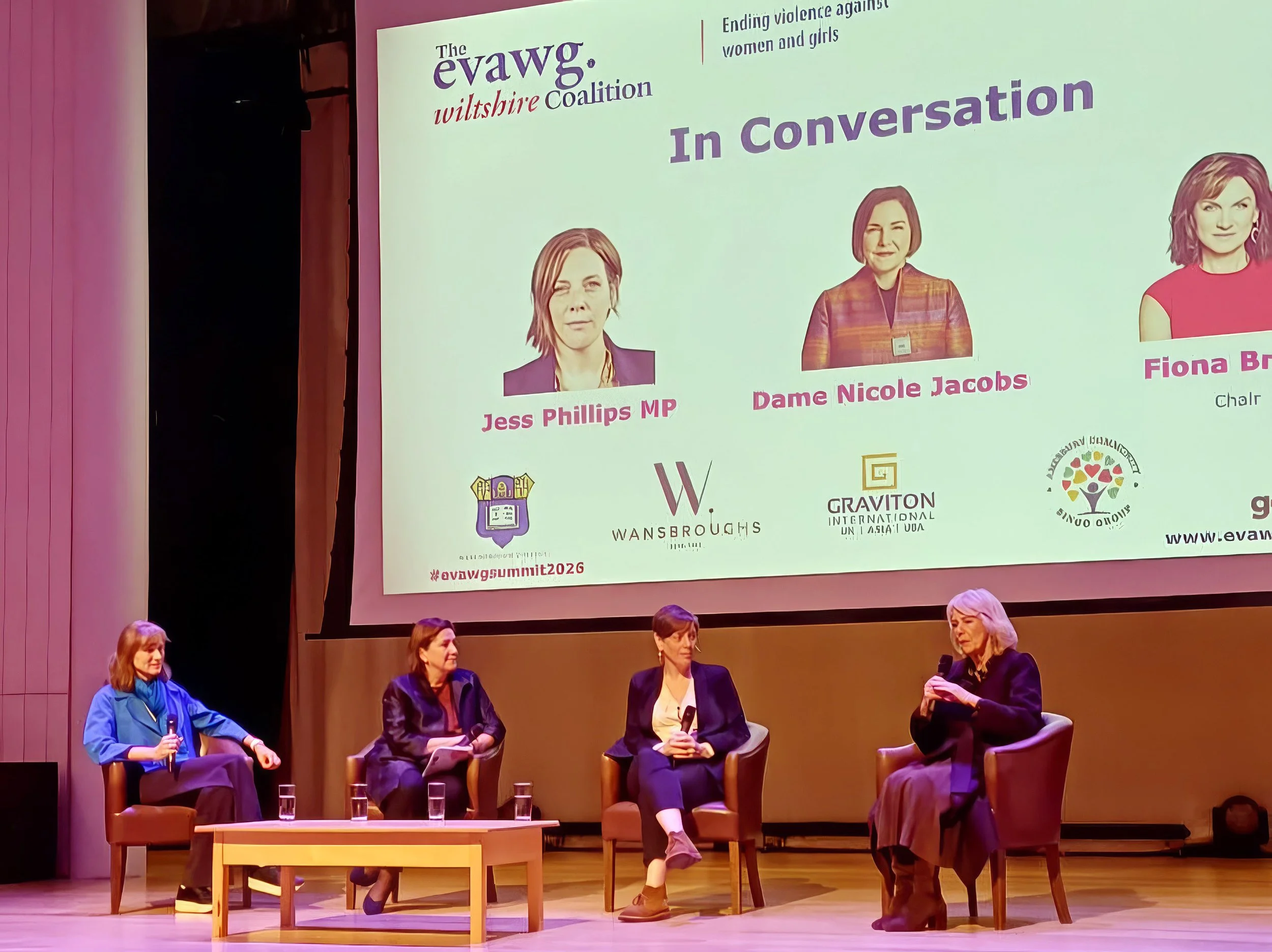
Her Majesty the Queen, right, on the panel with Fiona Bruce, Dame Nicole Jacobs and Jess Phillips MP
Wiltshire Bobby Van staff joined Queen Camilla, police officers, judges, MPs and survivors at a summit aimed at ending violence against women and girls.
The event, organised by Ending Violence Against Women and Girls (EVAWG) Wiltshire, brought together people working to tackle domestic abuse for a day of discussion at Marlborough College.
By encouraging open conversations and closer cooperation between agencies, the summit aimed to build a stronger, joined-up approach to preventing domestic abuse and creating safer communities.
Queen Camilla, a long-standing campaigner against domestic abuse, joined in a panel discussion with MP Jess Phillips and Dame Nicole Jacobs, Domestic Abuse Commissioner for England and Wales and led by BBC Question Time presenter Fiona Bruce.
Last year, a book revealed that The Queen fought off an attempted indecent assault when she was a teenager. She told the audience that when she was younger, the issue was “a taboo subject that nobody talked about, it was hush-hush”.
“Hopefully if we keep on talking and having gatherings like this we will, I don’t know in how many years, but we might be able to put an end to it forever,” she added.
She described survivors, police officers and other invited guests as “heroes”, saying she was impressed, as a resident of Wiltshire, that the county is “leading the way in this quest”.
The summit, which also had a panel discission featuring Wiltshire Chief Constable Catherine Roper and Louisa Rolfe, Police Reform Lead at the National Police Chiefs’ Council, was organised by Lady Lansdowne, a Queen’s Companion.
“To make societal change, we need to start small; we need to start locally,” she said. “By creating a group that is beginning to have conversations that were not happening before, I think we can make change.”
Among other speakers were Carole Gould from Chippenham and Julie Devey, both of whom have campaigned for change after losing their daughters to domestic abuse.
They want relationship and sex education to be taught in schools and colleges up to the age of 18, so young people recognise coercive, controlling and unhealthy relationships and understand how to leave them safely.
Carole stressed the importance of frontline services communicating and working together, saying prevention was key to ensuring other families did not experience similar tragedies.
“It’s incredibly important for frontline services to come together and communicate," said Carole, whose daughter Ellie was murdered by her ex-boyfriend the day after she ended their relationship.
“We don’t want anybody to go through the tragedies that we've both gone through, and prevention is what will stop that.”
Bobby Van Director Jennie Shaw, who established EVAWG alongside Lady Lansdowne, Jennie Shaw and Nicky Alberry, said it was important the charity was represented at the summit because of its role in helping keep women at risk of domestic abuse safe in their homes.
“The summit was extremely valuable because it put a lot of like-minded people with influence in the same room and, as Lady Lansdowne said, inspiring conversation is a catalyst to change. We were delighted Her Majesty the Queen was able to be there because she is such a staunch advocate for EVAWG.
“The event was a great success because of the quality of the speakers and the discussions and I hope many people from the organisations will have gone away inspired to help make the changes we need to ensure all women and girls live safe lives.”
She said the aim of changing attitudes towards domestic violence is achievable, despite the size of the task. “I never thought I would see the end of apartheid. If you spoke to our grandchildren, they would probably find it extraordinary that people once smoked in restaurants – or even on aeroplanes,” she said. “Yet all of these things, once difficult to imagine, have become reality.
"So why should we accept that domestic abuse is an inevitable part of society? What we have come to regard as normal can change. Attitudes can change. Behaviour can change. And what once seemed impossible can become the expectation. We have raised the bar. Now we need to make sure society catches up with it.”